Singapore vs. Hong Kong vs. ASEAN: How the Lion City's Legal
Singapore vs. Hong Kong vs. ASEAN: How the Lion City's Legal Framework Stacks Up for Business Leaders When a regional business founder relocates their holding company's legal base to Singapore, the fi...
Singapore vs. Hong Kong vs. ASEAN: How the Lion City's Legal Framework Stacks Up for Business Leaders
When a regional business founder relocates their holding company's legal base to Singapore, the first thing their former counsel in Hong Kong asks is: "Why Singapore?" The second question is almost always: "Is Singapore actually more regulated, or just more expensive?" The honest answer shapes everything from how you structure a shareholder agreement to whether your FinTech product needs a full MAS licence or just a notification. This is a head-to-head comparison of Singapore's legal framework against Hong Kong and the broader ASEAN market — written for decision-makers who need facts, not marketing.
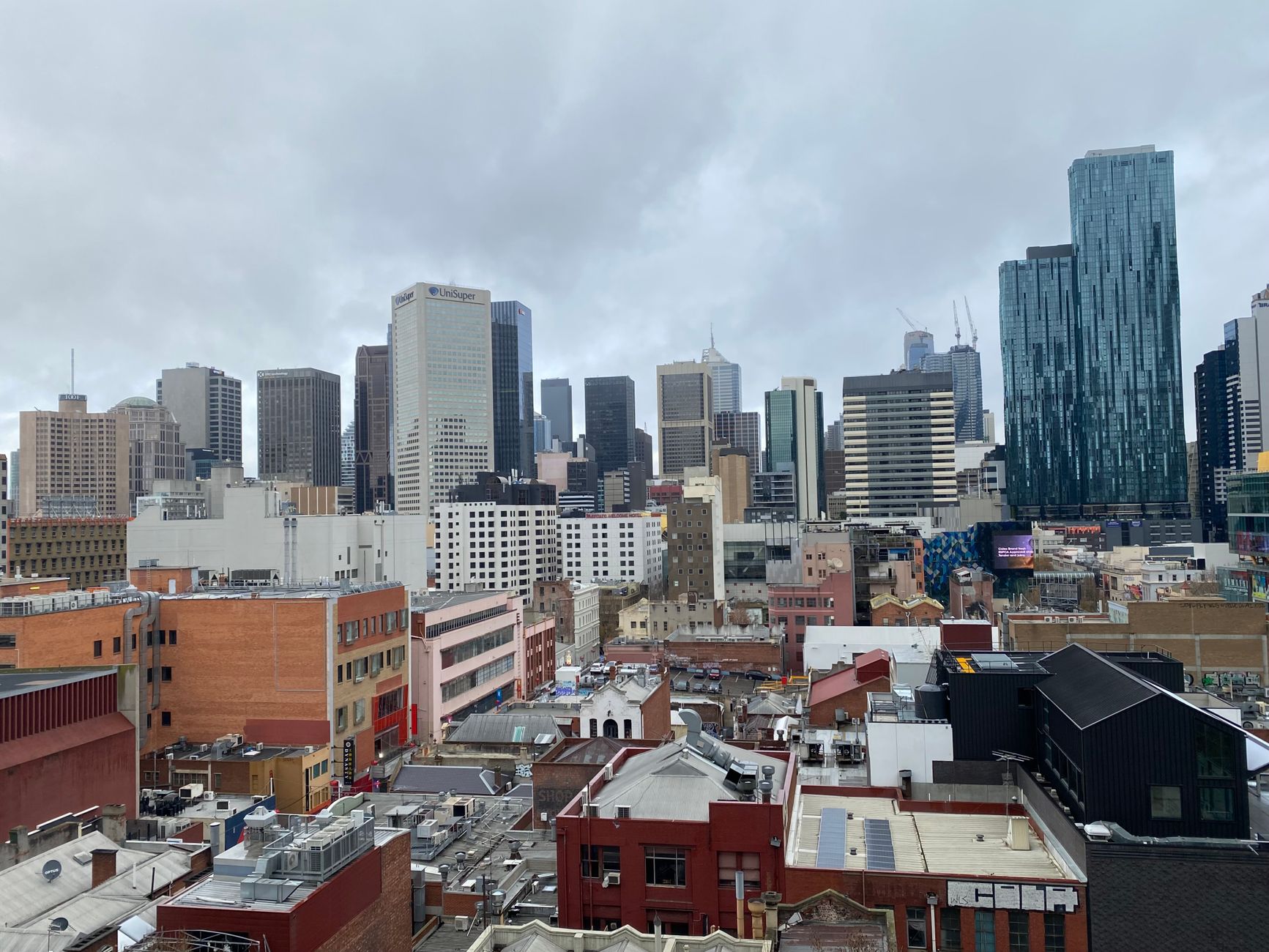
Photo by Aayush Bhansali on Pexels
Singapore's legal infrastructure rests on English common law, but it has diverged from Hong Kong in meaningful ways over the past decade. The result is a system that is simultaneously more structured and more proactive than most regional alternatives. For high-net-worth individuals, family offices, and multinational corporations, those differences compound into real operational and strategic consequences.
The Singapore Takeover Code: What Every Director Needs to Know
The Singapore Code on Take-overs and Mergers, administered by the Securities Industry Council (SIC), applies to all public companies listed on the Singapore Exchange (SGX). The statutory hook is Section 139 of the Securities and Futures Act (SFA), which gives the Code its legal teeth — and the 30% threshold it enforces has caught more directors off-guard than any other provision in Singapore corporate law.
Unlike Hong Kong, where the Takeovers Code is also in force but with a slightly different trigger mechanism, Singapore's framework places significant obligations on directors the moment their company's shareholding crosses that line. A Singapore Takeover is not just a transaction — it is a regulatory event with mandatory offers, disclosure requirements, and a window of restricted actions that can catch founders mid-dilution. Private companies are generally outside the Code's scope, but once a company has SGX listing ambitions or institutional investors, the framework becomes mandatory. For any business considering a reverse takeover in Singapore, early engagement with qualified counsel is essential — the penalties for inadvertent triggering are severe and the SIC's rulings are not easily reversed.
Payment Services Act 2019: Singapore's FinTech Guardrail
Singapore's Payment Services Act 2019 (PSA 2019) is one of the most comprehensive payment-services frameworks in ASEAN. MAS licences payment service providers under distinct activity categories — account issuance, e-money issuance, domestic money transfer, cross-border money transfer, merchant acquisition, and digital payment token services — creating a structure that forces clarity on what a FinTech company actually does before it starts doing it.
This stands in contrast to the approach taken in several ASEAN jurisdictions where payment regulation remains fragmented across central bank circulars and advisory letters. For founders building payment-adjacent products, Singapore's PSA 2019 provides a single statute, a single regulator, and a defined licensing pathway. The compliance cost is real, but so is the certainty — and for institutional clients and family offices, certainty in regulatory standing is worth more than a lower licensing fee in a less structured jurisdiction.
The Copyright Act 2021 and What It Means for Tech Founders
Singapore's Copyright Act 2021 replaced a 1987 statute and brought Singapore law into step with how content is created and used in the platform era. For most businesses the reform is technical. For a specific and growing group — AI companies, machine learning research teams, computational content platforms — the Singapore Copyright Act matters for one provision in particular: the computational data analysis exception.
Singapore legislated explicitly on whether training a machine learning model on copyrighted inputs is permissible without rights-holder consent. This is not universally addressed across ASEAN. In Hong Kong, copyright law continues to operate under the Copyright Ordinance Cap. 528, which does not yet contain a TDM (text and data mining) exception. Several ASEAN jurisdictions have no equivalent provision at all. Singapore's approach gives AI-adjacent companies and research institutions a statutory defence that simply does not exist in comparable form elsewhere in the region.
Shareholder Agreements, Model Constitutions, and the ACRA Framework
Singapore private limited companies adopt the ACRA Model Constitution by default. That constitution is public — filed with ACRA, visible on BizFile+ — and binds the company and its members. A shareholders agreement sits on top of it: private, contractual, binding only the parties who sign it. The distinction matters because bespoke economic terms — preference share structures, anti-dilution provisions, drag-along rights — typically need to live in both documents to be enforceable in the way the parties intend.
Breach of contract disputes arising from shareholder contracts are among the most common commercial matters brought before Singapore courts. The quality of the underlying agreement determines how quickly and cheaply those disputes resolve. Under Singapore contract law, a well-drafted SHA with properly drafted breach of contract provisions and clear dispute resolution clauses can significantly narrow the scope of litigation. An ambiguous one does the opposite. For founders and investors entering into shareholders agreements, the ACRA framework provides the structural floor — but what sits above it is where real risk lives.
Dispute Resolution: Singapore as a Regional Anchor
Singapore's courts — including the State Courts, which handle IP cases with e-discovery capability that surpasses most regional equivalents — and the Singapore International Commercial Court (SICC) for international disputes, give the Lion City a dispute resolution infrastructure that few ASEAN jurisdictions can match. The code on takeovers and mergers is enforced by a specialist body (the SIC) whose decisions carry real consequences. Commercial arbitration in Singapore benefits from institutional support through the Singapore International Arbitration Centre (SIAC), which is consistently ranked among the world's top arbitral institutions.
Why Singapore's Legal Framework Holds Together
When you examine the full picture — the Singapore Takeover Code, the PSA 2019, the Copyright Act 2021, the ACRA Model Constitution, and Singapore's court infrastructure — what emerges is not a collection of individual statutes but a system where the parts reinforce each other. The framework is more structured than Hong Kong for regulated activities. It is more systematically codified than most ASEAN alternatives. And for businesses that need legal clarity across multiple practice areas simultaneously — corporate advisory, IP, regulatory licensing, and commercial litigation — that coherence has real value.

Photo by António Ribeiro on Pexels
Quahe Woo & Palmer LLC (UEN 200911430C) is a boutique multi-disciplinary Singapore law firm with offices in Singapore and Hong Kong and membership in the Multilaw global network covering ASEAN and beyond. With 24 practice areas spanning corporate and M&A, criminal defence, family law, IP, FinTech, and complex commercial litigation, the firm advises high-net-worth family offices, multinational corporations, SGX-listed companies, private equity funds, and institutional clients. Recognised by The Straits Times' Singapore's Best Law Firms 2023, Chambers Asia-Pacific, Legal 500 Asia-Pacific, and Benchmark Litigation Asia-Pacific.
For initial enquiries, contact the team at qwp.sg/contact-us or call +65 6622 0366.
Thank you for reading this piece from our digital heirloom collection.
Quahe Woo & Palmer LLC · The Digital Heirloom · Volume I